
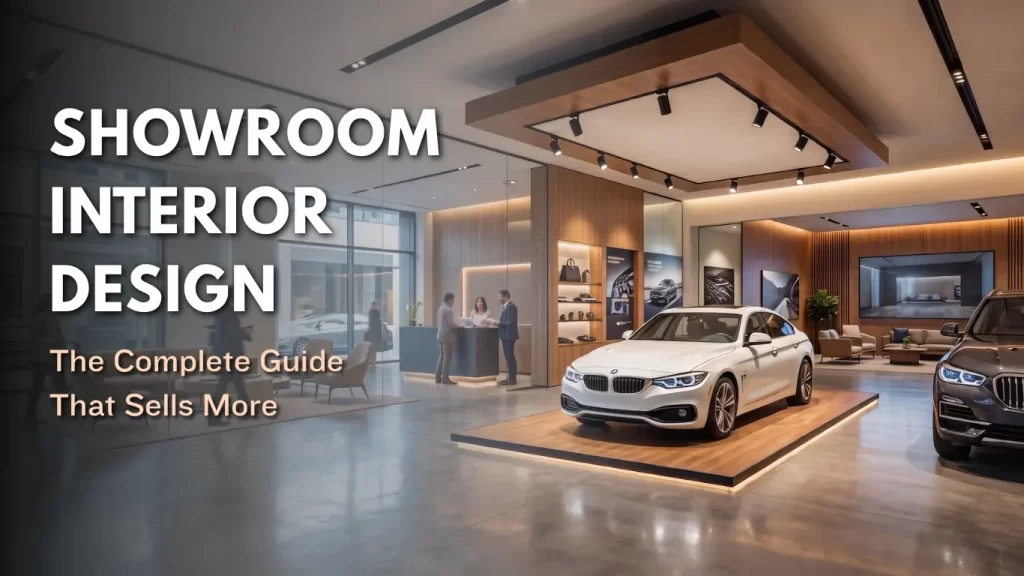
Walk into ten showrooms and nine of them will look the same — bright lights, glass counters, a few plants, and a salesperson waiting to pitch you. But walk into the tenth one, and something changes inside you before anyone even says “hello.” That difference is not luck. It is Showroom Interior Design done with intention. This guide is not for every showroom owner. It is for the ones who understand that their space is not a shop — it is a story. If you are building or redesigning a showroom for people who don’t just buy things, they buy feelings, this guide will show you exactly what most designers won’t tell you, and what your competitors are too scared or too lazy to try.
Who Actually Needs This Kind of Showroom Interior Design?
Let’s be honest for a second. A small mobile shop or a local furniture store does not need to think this deeply about design. Their customers walk in, compare prices, and walk out with a product. That’s it. There is nothing wrong with that — it’s just a different game.
But there is a completely different world where Showroom Interior Design becomes the entire reason a sale happens. Think about brands like Bugatti, Hermès, Richard Mille, Stefano Ricci, Lotus Eyewear, or Berluti. The people walking into these showrooms are not “customers” in the normal sense. They are people who already have money. They are not looking for a good deal. They are looking for a good feeling.
This is the real truth nobody says out loud: ultra-rich buyers don’t walk in to compare features. They walk in to feel something they cannot get anywhere else. And if your showroom fails to give them that feeling, you haven’t just lost a sale — you’ve lost hours of their time, thousands spent on rent, marble, lighting, and staff, all wasted in a few silent minutes.
The Psychology Behind Why Elite Buyers Buy
Middle-class buyers think with logic first: price, warranty, utility. Ultra-rich buyers think with emotion first, and justify it with logic later. This single difference changes everything about how a luxury showroom should be designed.
When someone who owns three homes and a private jet walks into your showroom, they are not impressed by “expensive.” They have already seen expensive a thousand times. What impresses them is restraint — the quiet confidence of a space that doesn’t try too hard. A truly luxury showroom whispers instead of shouts. It makes the visitor feel like they’ve entered a private world made only for people like them.
This is the psychological core of great Showroom Interior Design — it is not about showing off the product. It is about making the buyer feel chosen, understood, and important the moment they step through the door.
The Real Elements of a Showroom That Sells
Here is where most designers stop at the surface. Let’s go deeper.
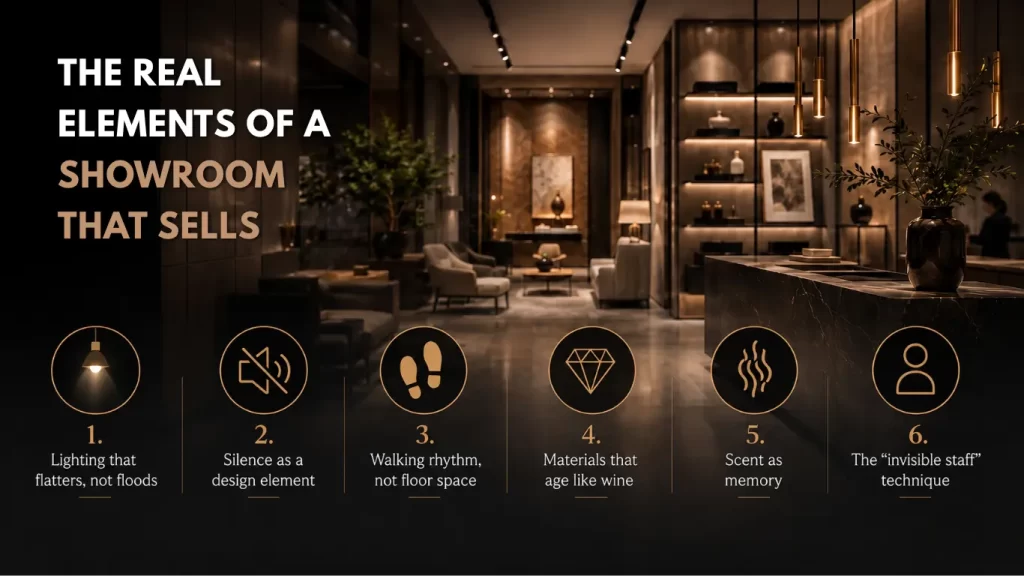
1. Lighting that flatters, not floods Elite showrooms rarely use harsh white light. They use warm, layered lighting that makes skin, leather, and metal look richer. Every product should look like it’s glowing from within, not lit from outside.
2. Silence as a design element Most showrooms fear silence and fill it with background music or chatter. But true luxury spaces use silence on purpose. Silence tells the visitor, “This place is calm, exclusive, and not for the crowd.” It slows their heartbeat, and a slower heartbeat leads to a more thoughtful, emotional decision.
3. Walking rhythm, not floor space Cheap showrooms think about how many products they can fit. Elite Showroom Interior Design thinks about how a person moves through the space — where they pause, where they turn, where they discover something unexpectedly. This “walking rhythm” is what makes a showroom feel like a journey instead of a shelf.
4. Materials that age like wine Marble, brass, aged wood, and raw leather are chosen not because they look new, but because they look like they will look even better in ten years. Ultra-rich buyers subconsciously judge whether a brand will last — the materials answer that question before a single word is spoken.
5. Scent as memory This one almost nobody talks about. A signature scent, used subtly, creates a memory link. Months later, that same scent anywhere else will remind the visitor of your showroom. Smell is the strongest trigger for memory in the human brain, and very few designers use this intentionally.
6. The “invisible staff” technique In most showrooms, staff hover and pressure. In elite spaces, staff are trained to be present but invisible — never approaching first, always reading body language, and stepping in only at the exact right moment. This single behavior change can increase sales far more than any decor upgrade.
What Most Competitor Blogs Won’t Tell You
Almost every article on Showroom Interior Design talks about lighting, colors, and layout. Very few talk about the things that actually separate an average luxury showroom from a legendary one.
- Temperature control as a mood tool – Slightly cooler air makes buyers feel alert and premium, while warmer air feels casual and cheap. Elite showrooms fine-tune temperature the same way they fine-tune lighting.
- Sound absorption, not sound addition – Instead of adding music, the best spaces invest heavily in materials that absorb outside noise, creating a bubble of calm the moment someone steps in.
- The “no price tag” psychology – Not showing prices openly isn’t about hiding cost. It removes the buyer’s logical brain from the room, keeping them in an emotional, exploratory state longer.
- Micro-storytelling corners – A small corner dedicated to the brand’s history, craftsmanship, or founder’s journey (without shouting “buy now”) builds trust the same way word-of-mouth does — quietly and powerfully.
- Designed exit moments – The last thing a visitor sees before leaving is remembered the longest. Elite showrooms design the exit path as carefully as the entrance.
These are the details that turn a showroom from “nice” into “unforgettable” — and unforgettable is what makes an ultra-rich buyer come back, and bring their friends.
The Real Cost of Getting It Wrong
Imagine spending crores on rent, marble flooring, gold accents, and premium furniture — and the ultra-rich visitor still walks out feeling nothing. No admiration. No emotional pull. Just polite silence.
That is the biggest risk in this business. It is not about running out of budget. It is about spending a huge budget on the wrong things — things that look expensive to the eye but say nothing to the heart. A well-thought-through Showroom Interior Design protects that investment by making sure every rupee spent creates an emotional return, not just a visual one.
A Quick Look at How Top Luxury Brands Approach This
Brands like Bugatti design their showrooms to feel more like an art gallery than a car dealership, letting the vehicle sit like a sculpture rather than a product for sale. Hermès stores are known for their calm, boutique-like layout that makes even a small handbag feel museum-worthy. Richard Mille showrooms often use engineering-inspired displays, treating each watch like precision art rather than merchandise. Stefano Ricci and Berluti lean into old-world craftsmanship — wood, leather scent, and quiet luxury — to make bespoke tailoring feel personal and generational. Lotus Eyewear focuses on intimate, private viewing spaces so the buyer feels like they are being handed something rare, not sold something common.
None of these brands are selling products anymore. They are selling identity, emotion, and belonging — and their showroom design is the silent salesperson doing all of that work.
Looking for an Showroom Interior Design ?
Whether you’re planning your dream Showroom, or a complete turnkey project, we’re here to help bring your vision to life with thoughtful design and seamless execution.
Frequently Asked Questions
Q: Is Showroom Interior Design only for car or fashion brands?
No. Any brand targeting an elite, high-spending audience — jewellery, watches, real estate, or bespoke fashion — needs this same emotional approach to design.
Q: How is luxury showroom design different from normal retail design?
Normal retail design focuses on visibility and volume of sales. Luxury Showroom Interior Design focuses on emotion, restraint, and making the buyer feel special, not sold to.
Q: Does a small showroom budget mean I can’t achieve this feeling?
Budget matters less than intention. A smaller space designed with the right lighting, silence, and material choices can still create a powerful emotional experience.
Conclusion
Showroom Interior Design is not about filling a space with expensive things — it’s about creating a feeling so strong that the person standing inside forgets about price and starts thinking about belonging. Ultra-rich buyers don’t walk in to compare products; they walk in to feel understood, respected, and quietly impressed. Every light, every silence, every scent, and every empty corner is either working for you or against you. The brands that understand this — the Bugattis, the Hermès, the Richard Milles of the world — are not lucky. They simply respected the psychology of their audience before they respected the aesthetics of their space. If you get this right, your showroom will not just sell a product. It will create a memory your customers carry with them long after they walk out the door.