
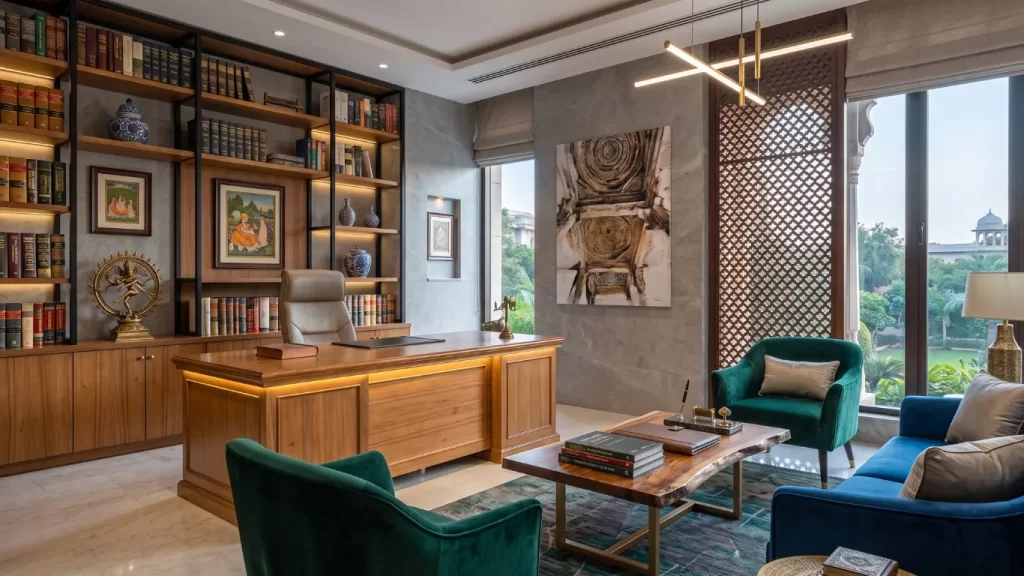
Walk into any top advocate’s office, and you will feel something before a single word is spoken. That feeling is not by accident. It is designed.
Advocate office interior design is not just about looking nice. It is about building trust in the first ten seconds. A client who walks in nervous, worried, or unsure needs to feel one thing immediately: “I am in safe hands.”
Think about it. A politician, a business owner, or a celebrity walking into your office is not just judging your legal skills. They are reading your space. They notice the chair they sit on. They notice the silence. They notice whether other people can overhear their problems.
This is why advocate office interior design is not a luxury. It is a business strategy. In this guide, we will walk through the 12 essential elements of advocate office interior design that turn an ordinary law office into a space that commands respect, protects privacy, and wins client confidence before the first sentence is spoken.
1. A Reception That Sets the Tone Instantly
In advocate office interior design, the reception area is your handshake. It speaks before you do.
When a high-profile client walks in, they form an opinion within seconds. A cramped, outdated reception says “struggling practice.” A calm, well-lit, elegant reception says “this advocate is serious and successful.”
Why it matters:
A good reception reduces anxiety. Legal matters are stressful. Clients arrive worried about court dates, disputes, or contracts. A warm reception desk with a courteous receptionist immediately lowers that stress.
What premium clients notice:
- The quality of the reception desk material (marble, veneer, or solid wood feels premium; laminate feels cheap)
- Whether the space smells fresh
- Whether the lighting is warm or harsh
- Whether they are greeted immediately or ignored
Expert tip: Keep the reception desk slightly elevated and use warm LED lighting instead of cold white tube lights. Warm lighting instantly feels more human and less clinical.
Common mistake to avoid: Overcrowding the reception with too much furniture or files. Clutter signals disorganization, and disorganization is the last thing a client wants to associate with their legal matter.
2. A Waiting Area Designed Like a Premium Lounge
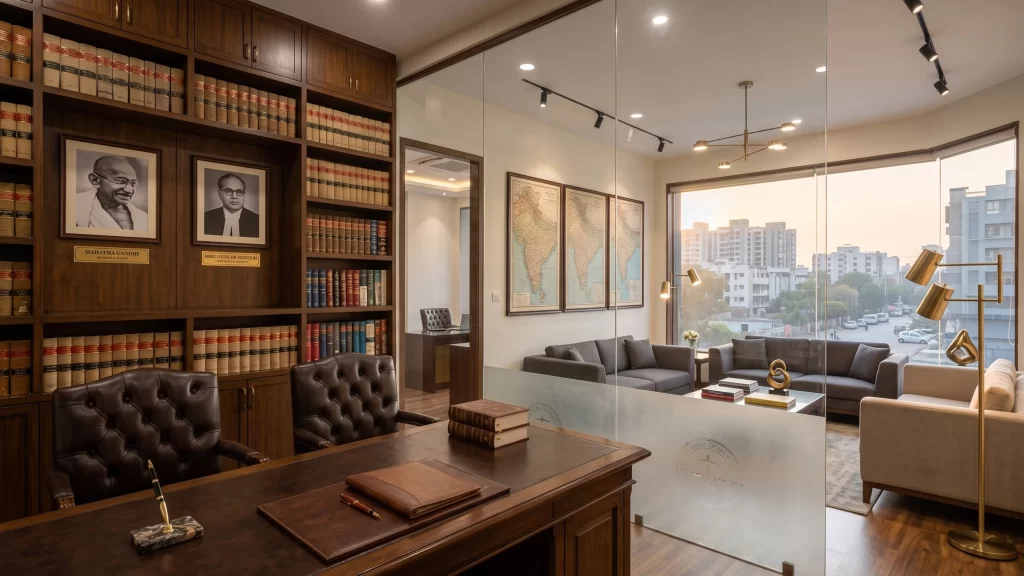
Most advocate offices treat the waiting area as an afterthought in their interior design planning. This is a huge missed opportunity, and it’s one of the most overlooked parts of advocate office interior design.
Your waiting area is where the client spends the most unstructured time. It is where boredom, anxiety, and judgment all happen together.
Why it matters psychologically:
Waiting feels shorter and less stressful in a comfortable, well-designed space. A hard plastic chair under a flickering tube light makes five minutes feel like thirty.
Design this like a boutique hotel lounge:
- Comfortable sofas instead of stiff chairs
- Soft background lighting
- A small refreshment counter with water and coffee
- Recent newspapers or a tablet with legal news
- Soundproofing so clients cannot hear other conversations from cabins
Client perception: A well-designed waiting area quietly says, “This advocate values my time and comfort.” That single impression builds loyalty before the meeting even begins.
3. Lighting That Controls Mood and Perception
Lighting is one of the most underestimated tools in advocate office interior design, yet it silently controls how people feel in a space.
The psychology behind it:
Harsh white lighting creates a clinical, interrogation-room feeling. Warm, layered lighting creates calm, trust, and comfort — exactly what a client needs when discussing sensitive legal matters.
How to design lighting for an advocate office:
| Area | Recommended Lighting | Purpose |
| Reception | Warm ambient lighting | Welcoming first impression |
| Cabin | Layered task + ambient lighting | Focus and comfort |
| Meeting room | Soft, adjustable lighting | Serious, confidential mood |
| Library | Bright, even lighting | Reading comfort |
Expert tip: Avoid a single overhead light source. Combine ceiling lights, wall lights, and desk lamps for depth and warmth.
4. An Executive Desk That Communicates Authority
Your desk is your throne, whether you intend it or not. Clients unconsciously judge your seniority and success by the desk you sit behind.
Why it matters:
A flimsy, cluttered desk undermines authority, no matter how skilled you are as an advocate. A solid, well-proportioned desk in quality wood or a premium laminate finish communicates seniority and stability.
Practical guidance:
- Choose a desk that is proportionate to your cabin size, not oversized or cramped
- Keep the desk surface mostly clear during meetings
- Position the desk so you are not facing a wall — facing the door or window feels more confident and open
Common mistake: Placing the desk directly facing the entrance door in a way that feels confrontational. A slight angle feels more welcoming while still projecting authority.
5. Bookshelves and a Legal Library That Build Instant Credibility
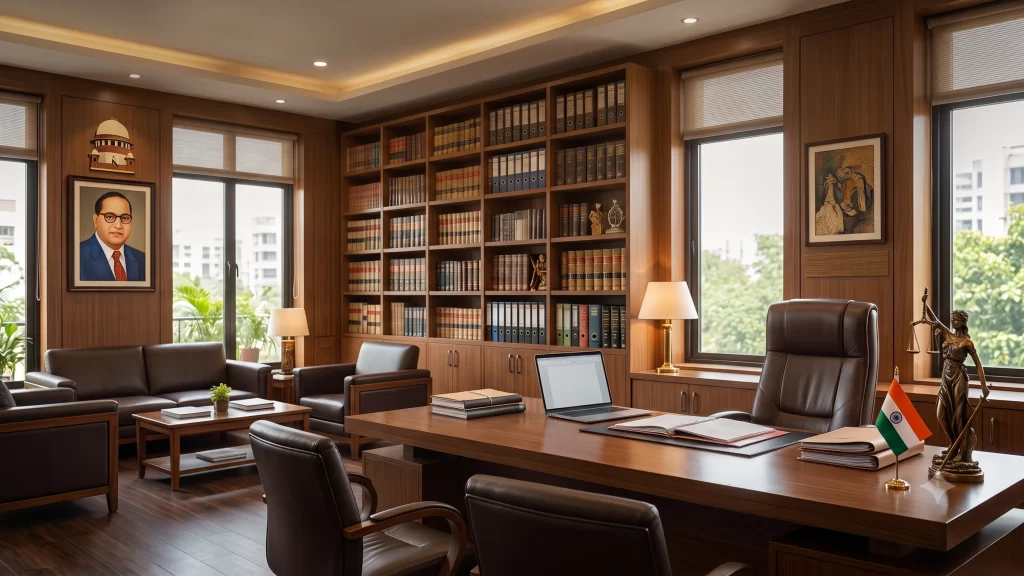
Nothing says “expert” faster than a well-organized legal library visible from the client’s seat.
Why this works on a psychological level:
Clients cannot verify your legal knowledge instantly, but they can see it. Rows of legal volumes, case law books, and bound journals act as visual proof of expertise, even before you speak.
Design tips:
- Use glass-front or open wooden shelving so the books are visible, not hidden
- Arrange books by category with visible spines
- Add subtle uplighting inside the shelf for a premium boutique-library feel
Client perception: A visible library silently reassures clients that they are dealing with a serious, knowledgeable professional, not a casual practice.
6. A Meeting Room Built Around Privacy and Confidentiality
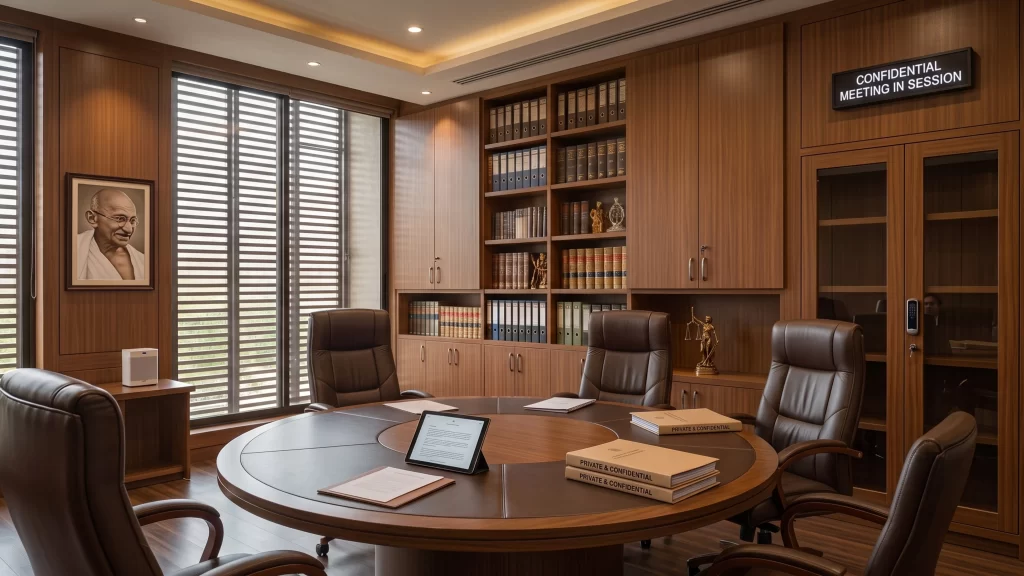
This is where competitors usually go wrong in advocate office interior design. They design meeting rooms for comfort but forget the number one thing clients care about: privacy.
Why privacy design matters more than anything else:
High-profile clients — politicians, celebrities, business owners — are terrified of being overheard. A single leaked conversation can damage reputations or business deals. If your meeting room is not soundproof, you lose trust instantly, no matter how good your legal advice is.
How to design for confidentiality:
- Use acoustic wall panels or soundproof insulation
- Avoid glass-walled meeting rooms unless fitted with soundproof glass and privacy film
- Position the meeting room away from the reception and general staff area
- Use solid-core doors, not hollow ones
Insight most articles miss: Confidentiality is not just an ethical requirement. It is a luxury feature. Clients are willing to pay more and stay loyal longer to an advocate whose office feels like a vault.
7. Color Psychology That Builds Calm and Trust
Colors affect emotions more than most people realize, and in advocate office interior design, color choice matters enormously.
Recommended color psychology for advocate offices:
- Navy blue and deep greys – convey authority, stability, and seriousness
- Warm beige and cream – create calm and reduce client anxiety
- Gold or brass accents – add a subtle sense of luxury without being flashy
- Avoid bright red or overly playful colors – these feel unprofessional in a legal context
Why it matters: Color sets the emotional undertone of every conversation that happens in that room. A calming palette helps anxious clients open up honestly, which ultimately helps you build a stronger case.
8. Premium Materials and Luxury Finishes
In advocate office interior design, there is a visible difference between an office that “looks fine” and one that feels genuinely premium. That difference is almost always in the materials.
What premium clients notice immediately:
- Solid wood versus cheap laminate
- Real marble or stone versus vinyl flooring
- Leather upholstery versus basic fabric
- Brass or matte-gold hardware versus plastic fittings
Why this matters for advocates specifically:
Legal fees for high-profile clients are often significant. Clients mentally justify higher fees when the environment feels equally premium. A shabby office creates doubt: “If they can’t invest in their own office, can I trust their advice?”
Expert tip: You don’t need to furnish the entire office in luxury materials. Focus on high-visibility areas — reception, meeting room, and your personal cabin — for maximum impact per rupee spent.
9. Certificates, Awards, and Achievement Walls
This is a subtle branding tool that most advocates underuse in their advocate office interior design.
Why it works:
Clients rarely ask about your qualifications directly. It can feel awkward. A tastefully designed wall displaying your degrees, bar council certifications, awards, and media mentions answers those unspoken questions silently and confidently.
How to display it right:
- Use matching frames for a clean, curated look
- Avoid overcrowding the wall — quality over quantity
- Place it where clients naturally see it while waiting or during the meeting, not hidden in a corner
Client perception: A well-curated achievement wall builds authority without you ever having to say “I am highly qualified.”
10. Technology Integration for a Modern, Efficient Image
Old, visible clutter of wires, outdated printers, and paper files scattered everywhere signals inefficiency.
What modern advocate offices are adopting:
- Digital case management displayed on a clean secondary screen during discussions
- Smart lighting and climate control for consistent comfort
- Discreet cable management so no wires are visible
- Video conferencing setup for remote client meetings or NRI clients
Why it matters: Clients equate technological efficiency with organizational efficiency. If your office looks current and tech-enabled, it reassures clients that their case will also be handled efficiently, not lost in paperwork.
11. Smart Storage That Keeps Confidential Files Secure and Invisible
Storage is rarely glamorous, but it directly affects both function and perception.
Why it matters:
Visible stacks of files scream disorganization and, more importantly, raise real confidentiality concerns. High-profile clients want to know their sensitive documents are secure, not lying on an open shelf.
Design solutions:
- Closed cabinetry with locks for sensitive files
- Fireproof storage for critical legal documents
- Digital backup systems paired with minimal physical storage on display
Practical benefit: Beyond perception, secure storage protects you legally too. Client confidentiality is a professional obligation, and your storage design should reflect that seriously.
12. Artwork, Greenery, and Décor That Add a Human Touch
A law office can easily feel cold and intimidating. This is why thoughtful décor is such an important part of advocate office interior design, softening the space without compromising professionalism.
Why this matters emotionally:
Legal matters are stressful. A completely sterile, corporate environment can make clients feel like they are just another case file. A few carefully chosen design touches make the space feel human and welcoming.
What works well:
- Original artwork or tasteful prints (avoid anything controversial or overly personal)
- Indoor plants like snake plants or peace lilies, which also improve air quality
- A subtle signature scent in the reception area
- Minimal, elegant décor — avoid clutter of personal photos or souvenirs in client-facing areas
Expert tip: Indoor plants near the waiting area have been shown to reduce perceived stress. It’s a small investment with a meaningful psychological return.
Why This Level of Detail Matters: The Psychology Competitors Ignore
Most articles on this topic stop at furniture and colors. But here’s what truly separates a good advocate office from a great one:
- Trust is built before conversation starts. By the time a client sits down, they have already formed 80% of their opinion about you, based purely on the space.
- Politicians and public figures notice details others miss — the discretion of your reception staff, the privacy of your meeting room, whether other clients can see them arriving.
- Ambience directly affects client retention. Clients don’t just return for good legal advice. They return to spaces that made them feel respected, safe, and valued.
- Premium design is a silent negotiation tool. A well-designed office subtly justifies premium fees without a single word being said about pricing.
Advocate office interior design, in this sense, is not decoration. It is a strategic extension of your legal practice.
Looking for an Advocate Office Interior Designer?
Whether you’re planning your dream office, or a complete turnkey project, we’re here to help bring your vision to life with thoughtful design and seamless execution.
Conclusion: Your Office Is Your Silent Advocate
Your legal skills win cases. But your office wins first impressions, client trust, and long-term loyalty. Every element — from the reception desk to the bookshelf lighting — works together to tell a story before you say a single word.
Investing in thoughtful advocate office interior design is not an expense. It is a long-term investment in your reputation, your client relationships, and your practice’s growth.
A great advocate speaks with confidence in the courtroom. A great office speaks with confidence the moment someone walks through the door.
Suggested FAQs
Q1: Why is interior design important for an advocate’s office?
It builds instant trust and credibility with clients, especially high-profile ones, before any conversation begins.
Q2: What is the most important element in an advocate office design?
Privacy and soundproofing in the meeting room are among the most critical, as confidentiality is central to legal practice.
Q3: What colors are best for a law office interior?
Navy blue, deep grey, warm beige, and gold accents work best for conveying authority and calm trust.
Q4: How can I make my advocate office feel more premium without overspending?
Focus your budget on high-visibility areas — reception, meeting room, and your personal cabin — using premium materials selectively.
Q5: Does office design really affect client retention for advocates?
Yes. Clients often return to advocates whose offices made them feel respected, comfortable, and secure, not just those with strong legal skills.